Motorcycle Travel
Guide to Iceland
Everything you need to know about riding in Iceland — from F-roads to the best routes and hidden gems.
Riding in Iceland
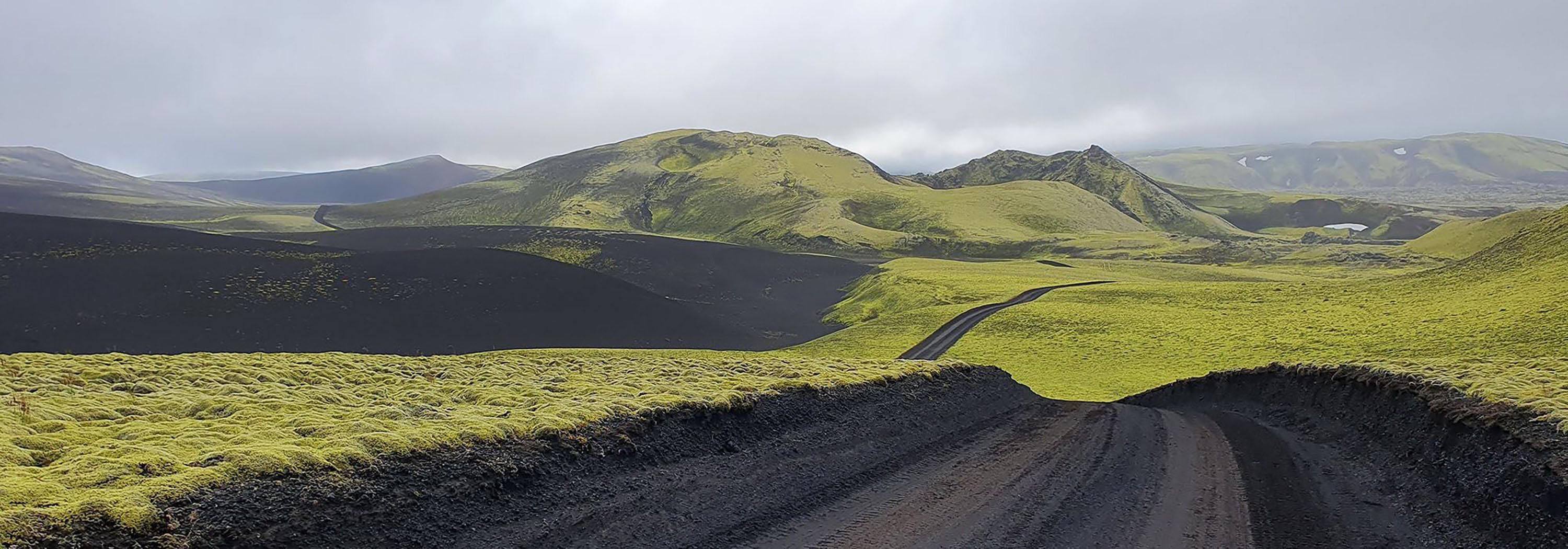
Iceland is unlike anywhere else on a motorcycle. Vast, remote, and relentlessly beautiful — with roads that range from smooth tarmac to unmarked tracks across lava fields.
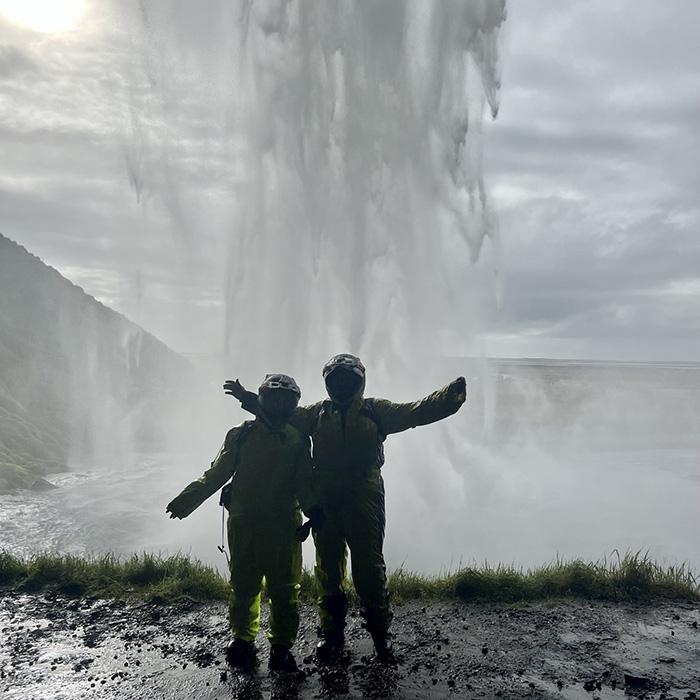
Iceland's landscape has been shaped by geology in a way that makes riding through it feel genuinely extraordinary. In a single day you can ride across black sand beaches, climb through volcanic highlands, cross glacial rivers, and arrive somewhere that feels completely untouched by the modern world.
But Iceland also demands respect. The weather can change in minutes. Some F-roads are genuinely remote — if something goes wrong, help is far away. This guide is written to help you plan a trip that's ambitious, safe, and worth every mile.
Paperwork & Entry
Iceland is part of the Schengen Area but not the EU — so entry requirements depend on your nationality. For UK passport holders post-Brexit, Iceland remains visa-free for stays up to 90 days in any 180-day period.
- ›Passport: Valid for at least 6 months beyond your travel dates
- ›Vehicle documents: V5C logbook (or equivalent), valid MOT, insurance certificate
- ›Insurance: Your UK policy likely covers Iceland — confirm this in writing before you go
- ›Green Card: No longer mandatory for Iceland from the UK, but recommended as proof of insurance
- ›EHIC/GHIC: The Global Health Insurance Card is accepted in Iceland — carry it
- ›Driving licence: UK licence is valid. International Driving Permit not required but useful
Bringing Your Own Bike
Shipping your own bike to Iceland is absolutely doable — and for many riders, riding a familiar machine is worth the logistics and cost. Several freight companies specialise in motorcycle shipping to Iceland.
Budget around £400–600 each way from the UK depending on bike size and timing. Allow 2–3 weeks each direction. Most freight goes via a consolidation service to Reykjavík — your bike typically arrives at the Sundahöfn port.
Before shipping: clean the bike thoroughly (Iceland has strict bio-security rules), drain fuel to a minimum, disconnect the battery, and remove any loose accessories. Document the bike's condition with photos before handover.
Some riders fly to Iceland and hire locally instead — which removes the shipping complexity entirely, though you're then riding an unfamiliar bike. We can recommend hire companies we've used and trust.
Getting There
All flights arrive at Keflavík International Airport (KEF), about 50km from Reykjavík. Icelandair, easyJet, and several other carriers fly direct from UK airports. Flying time is around 3 hours from London.
If you're hiring a bike in Iceland, pick-up is typically in Reykjavík. Most hire companies offer airport transfer or can collect you. If you're collecting a shipped bike, Sundahöfn port is a short taxi from the city centre.
Renting vs Your Own Bike
vs Joining a Tour
Three main ways to ride Iceland. Each has real advantages — and real trade-offs.
- No shipping cost or logistics
- Bikes are typically Iceland-ready (tyres, luggage)
- Walk away if it breaks down — their problem
- Good option if you don't own a suitable bike
- Expensive (£150–250/day for adventure bikes)
- Unfamiliar bike in demanding conditions
- Limited availability in peak season — book early
- Damage excess can be significant
- Ride a machine you know and trust
- Full control over spec, tyres, and setup
- Often cheaper overall for longer trips
- The satisfaction of riding your own bike there
- Shipping takes planning and cost (~£400–600 each way)
- You carry the mechanical risk
- Spares and breakdown support are your problem
Our guided tours include route planning, support vehicle, accommodation, and everything you need. You just ride.
Weather & Best Time to Go
Iceland in August is as good as it gets. But even then, pack for everything.
The riding season runs from late June to early September. Outside these months, most Highland F-roads are closed entirely — the Icelandic Road Administration (Vegagerðin) publishes road opening dates each year, which vary by snowmelt.
July and August offer the best combination of passable roads, longer daylight (near-continuous in July), and slightly more stable weather. September becomes unpredictable quickly. If you're targeting the Highlands, aim for July–August.
- ›June: Some F-roads still closed, but south and coast routes are excellent. Fewer tourists.
- ›July: Best Highland access. 24-hour daylight. Most popular — book everything early.
- ›August: Still excellent. Slightly shorter days. Our preferred tour window.
- ›September: Aurora starts. Roads closing fast. Coast-only recommended.
Accommodation & Costs
Iceland is expensive. There's no way around it. Budget at least £120–180/night for basic guesthouse accommodation in peak season, more in Reykjavík. The Highland mountain huts (Ferðafélag Íslands) are the most economical option in the interior — basic but clean, around £40–60/night if pre-booked.
Camping is popular and legal in designated areas, but wild camping is restricted on private land. Several campgrounds specifically accommodate motorcycles with covered storage. Book accommodation well in advance for July and August — this cannot be overstated.
Food costs run similarly high. Eating out in Reykjavík is London pricing or above. Outside the city, options become limited quickly — factor in self-catering for Highland sections.
Fuel prices are comparable to the UK. Petrol stations in the Highlands are sparse — the N1 app shows locations and stock. Fill up whenever you can.
Safety, Laws & Off-Road Rules
Iceland has strict environmental protection laws. Riding off designated tracks is illegal and carries heavy fines — the landscape takes centuries to recover from tyre tracks. Stay on marked routes.
- ›Speed limits: 50 km/h in towns, 80 km/h on gravel roads, 90 km/h on paved roads
- ›Blood alcohol limit: 0.05% — effectively zero tolerance for riding
- ›Headlights: Mandatory at all times, day and night
- ›Seatbelts: Mandatory (obviously)
- ›Off-road riding: Strictly prohibited outside designated F-roads and tracks
- ›River crossings: Only at designated fording points. Never attempt solo.
Road vs F-Road Conditions
The Ring Road (Route 1) is paved and generally well-maintained — though sections in the east and north can be narrow with loose gravel shoulders. It's excellent touring for road bikes.
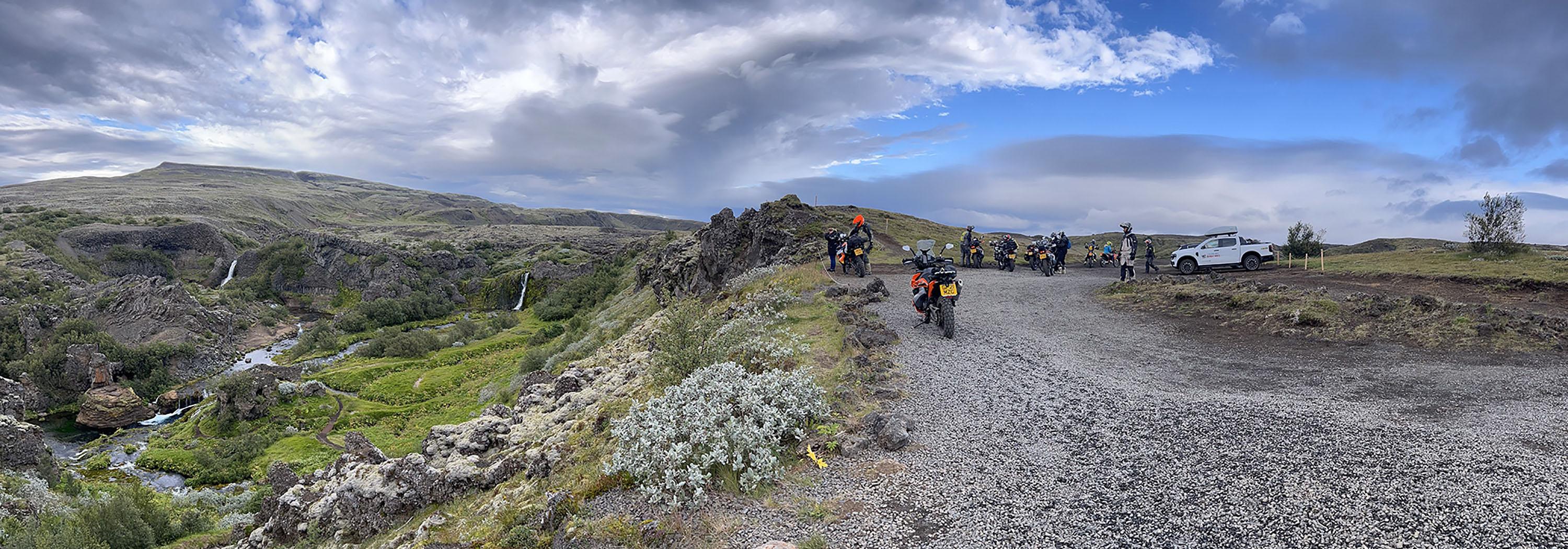
F-roads are a different category entirely. Surfaces range from compacted gravel to deep volcanic sand to boulder fields. River crossings are common and unavoidable on Highland routes. Water depth, flow speed, and riverbed consistency all vary — always assess before crossing, never cross alone.
Conditions change with weather. A route that was rideable in the morning may not be in the afternoon after rain.
Riding Gear
Iceland demands proper adventure touring kit. Sportsbike gear is completely inadequate. You need waterproofing, abrasion resistance, warmth, and visibility.
| Item | What We Recommend | Why |
|---|---|---|
| Helmet | Klim Krios Pro or equivalent adventure helmet | Lightweight, ventilated for exertion, goggle-compatible |
| Jacket | Klim Raptor GTX or similar waterproof hardshell | Gore-Tex waterproofing, CE armour, layering system |
| Trousers | Klim Badlands Pro or waterproof overpants | Full waterproof protection, knee/hip armour |
| Boots | Waterproof adventure/enduro boots | River crossings require boots you can walk in; waterproof is non-negotiable |
| Gloves | Waterproof adventure gloves + lightweight liner gloves | Iceland will soak unprotected gloves; cold hands are a safety issue |
| Base layers | Merino wool or technical base layers | Temperature regulation, dries quickly if wet |
Must-Ride Routes
Iceland has no shortage of incredible routes. These are our favourites — from accessible introductions to serious off-road challenges.
- ›F772 (Kaldidalur): The most accessible Highland route. Connects Þingvellir to the Snæfellsnes area. Compact, beautiful, and a genuine taste of Highland riding without extreme remoteness.
- ›F35 (Kjölur): The classic Highland traverse between Hofsjökull and Langjökull glaciers. 170km of remote, dramatic riding. No serious river crossings, but genuinely remote.
- ›F26 (Sprengisandur): The hardest of the main Highland routes. A true desert crossing through Iceland's interior. Multiple river crossings, minimal services. Do not attempt solo.
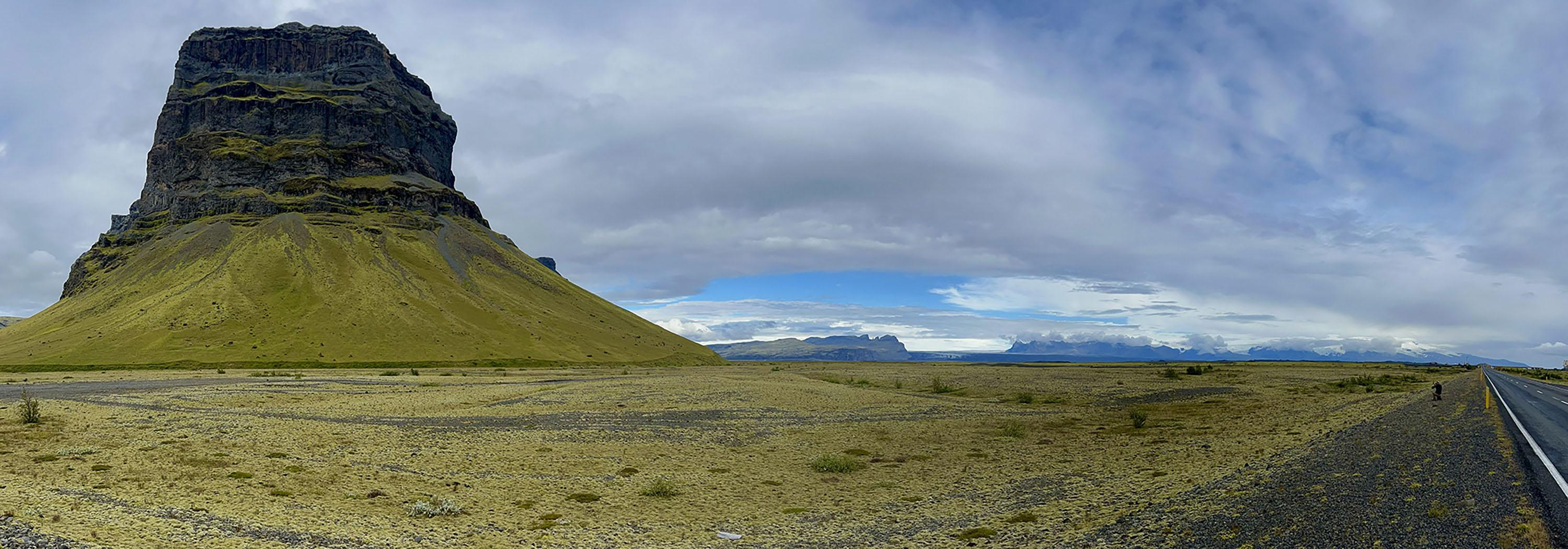
- ›South Coast: Seljalandsfoss, Skógafoss, Reynisfjara black sand beach, Jökulsárlón glacier lagoon. All road-accessible and extraordinary. The best introduction to Iceland.
- ›Snæfellsnes Peninsula: Compact loop with varied terrain — lava fields, coastal cliffs, and Snæfellsjökull glacier. Excellent in a day or two from Reykjavík.
Must-See Places
Iceland rewards riders who slow down. These are the places where we've stopped the bikes and just stood there for a while.
Practical Tips
- ›Carry Icelandic Króna for smaller petrol stations and mountain huts — card payment isn't universal
- ›Download offline maps before you go. Mobile signal disappears completely in the Highlands
- ›The road.is website and app gives real-time road conditions, closures, and river levels — check it every morning
- ›Camp only in designated sites. Environmental fines are real and enforced
- ›Never cross a river alone. Always assess depth, flow, and bed before committing
- ›Water your engine if you're doing river crossings — some bikes need special preparation
- ›Make sure your insurer knows you're riding F-roads. Some adventure policies exclude them
Tours by Freedom Moto
If this guide has made you want to ride Iceland — good. That was the point. And if you'd rather have someone who knows the routes, the conditions, and the best stopping spots, that's what we're here for.
Our tour covers the routes described in this guide, with support vehicle, expert guidance, pre-planned accommodation, and the kind of local knowledge you only get from having ridden Iceland dozens of times.
Groups are small. Pacing is relaxed. The experience is the destination. If that sounds like your kind of riding, take a look at what's available.
13 days. F-roads, river crossings, the Highlands. Small group. Full support. Places still available.